Use this walkthrough for a complete writing project. You will calibrate the agent’s style before you write, leave instructions in the draft while you keep typing, give feedback on highlighted passages, discuss those threads in place, and ask several reviewer agents to critique the finished draft.

Connect a provider

Before you start, follow the steps in Connect a provider. Continue after your provider and model appear in the header and the test request succeeds.

Add style guidance

Before you ask the agent to help with the draft, calibrate it on your writing voice. Open the references pill in the header, or Settings, then Writing references. Paste three of your passages, run the analysis, pick which close passages sound like you, and finalize the skill. Follow the full walkthrough in Style guidance. Expect about ten minutes.
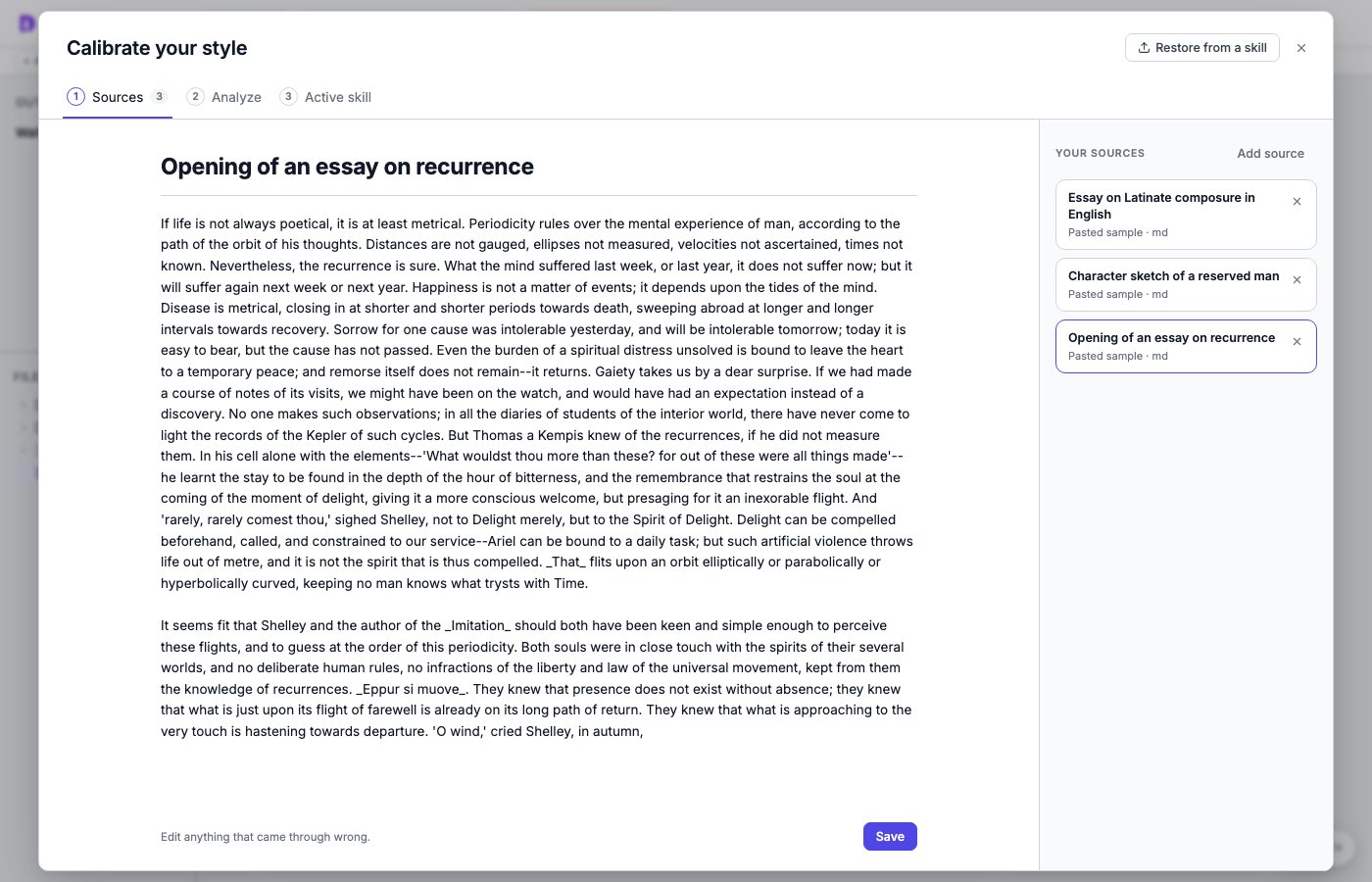
The Calibrate your style dialog with three pasted sources ready to analyze

Paste three of your passages, then run the style analysis.

Set the intended audience

Open Settings, then Intended audience. Describe who you are writing for in your own words, then choose Save. For example:
You can change or clear the audience later when the reader changes.

Start writing

Open an existing Markdown file or choose New file in the file tree. Write the opening in your own words so the agent has your point and phrasing to work from. You can find the latest draft in the project file because DocWriter saves your work as you type.
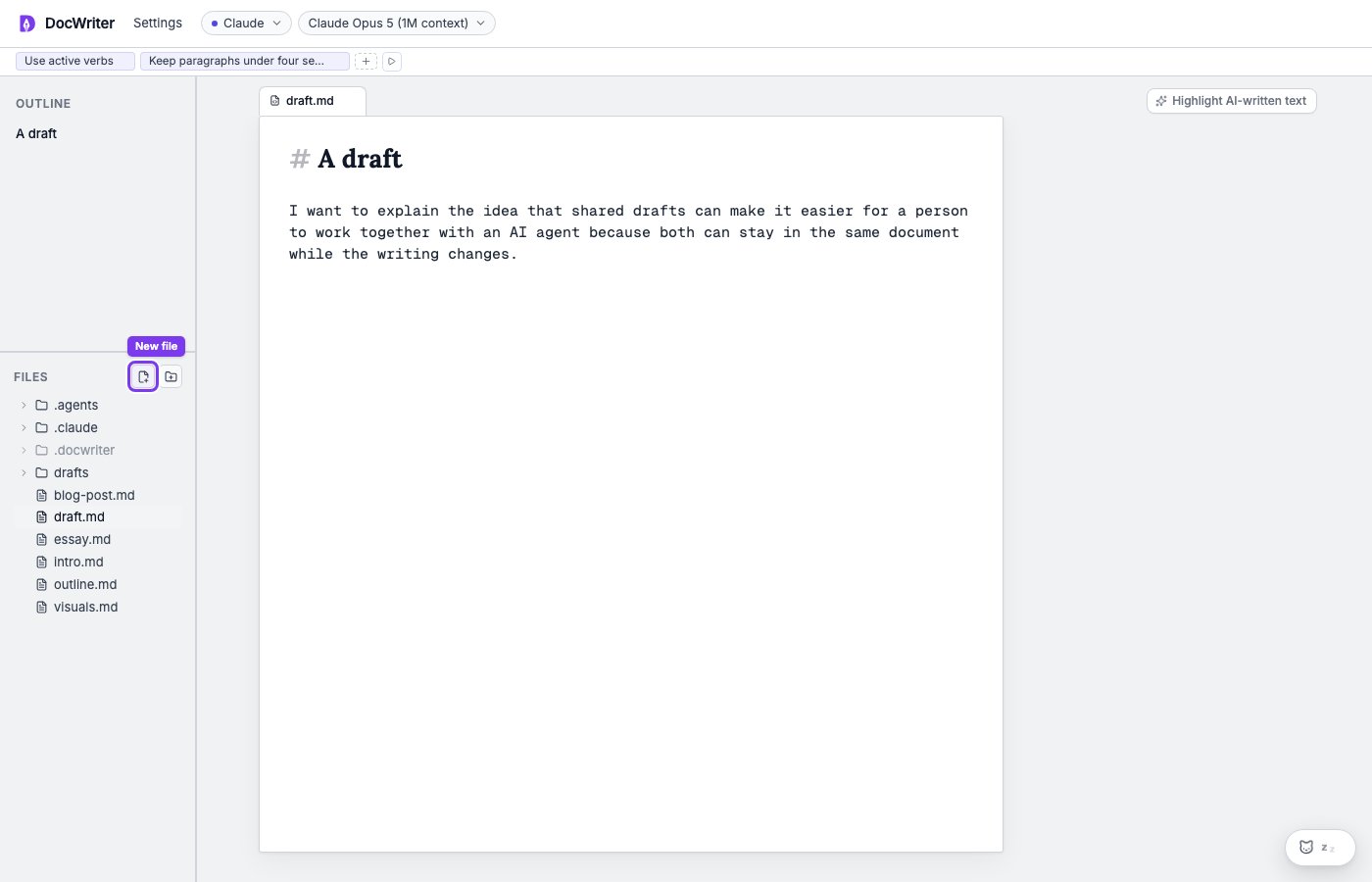
A new draft open in the DocWriter source editor
The agent reads the open draft as you work. After you stop typing for a few seconds, it can wake on its own and check what changed. You can also click the sleeping agent pill, or press Command or Control and Enter, to wake it sooner.

Leave a directive in the draft

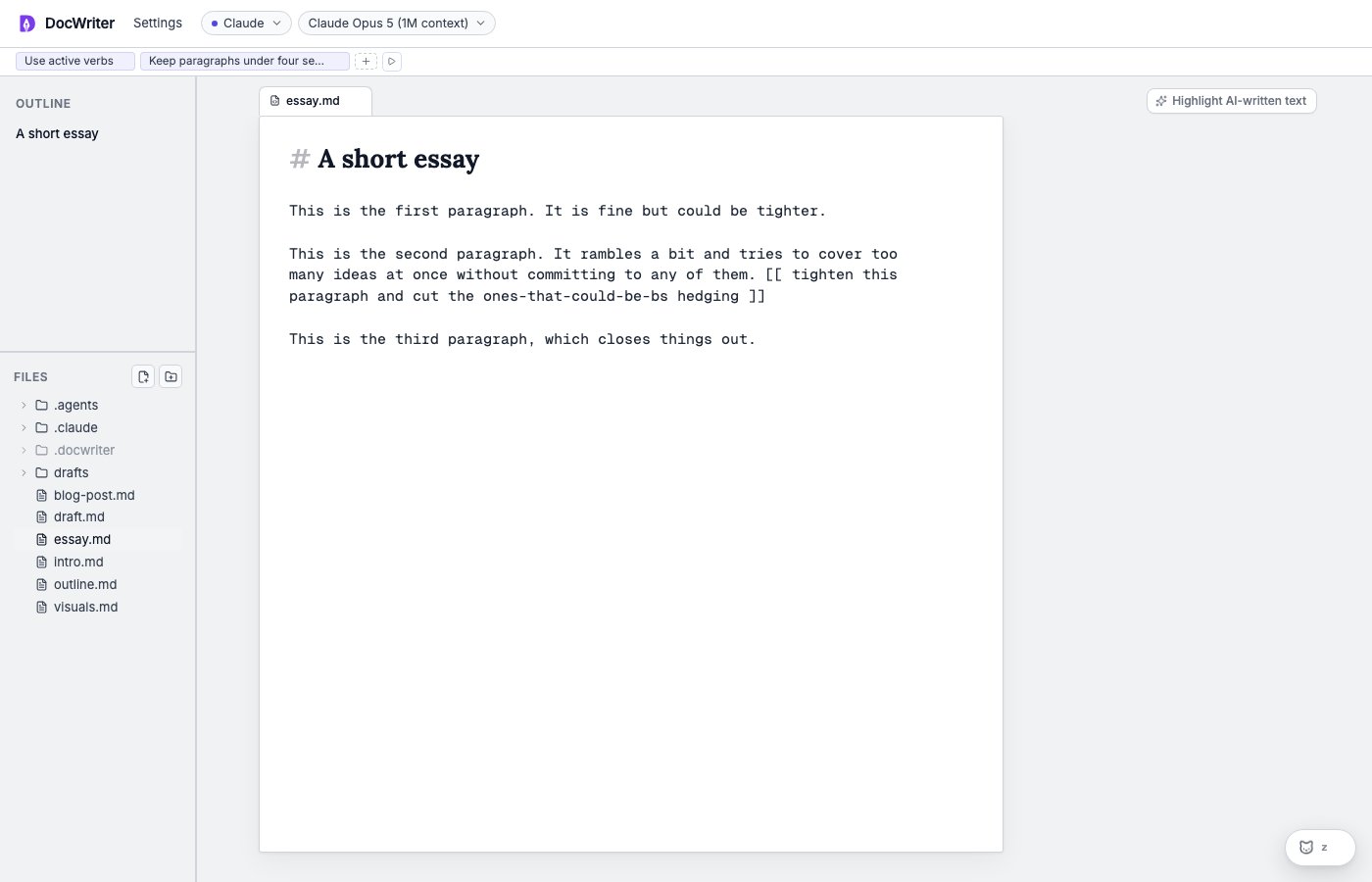
When you want help without leaving the keyboard, write the request in the draft itself. Put the instruction inside [[ and ]], (( and )), or << and >>:
Keep writing elsewhere. The next time the agent wakes, it finds the directive, treats it as an explicit request, and proposes an edit that handles the request and removes the directive text. Review that proposal the same way you review any other suggested change.
An inline directive written directly in the source document
Directives are ordinary document text until an accepted edit removes them, so you can revise the wording of the request before the agent runs.

Give feedback in place

Highlight a passage in the draft to open the feedback popup beside the text. Type what you want changed, for example:
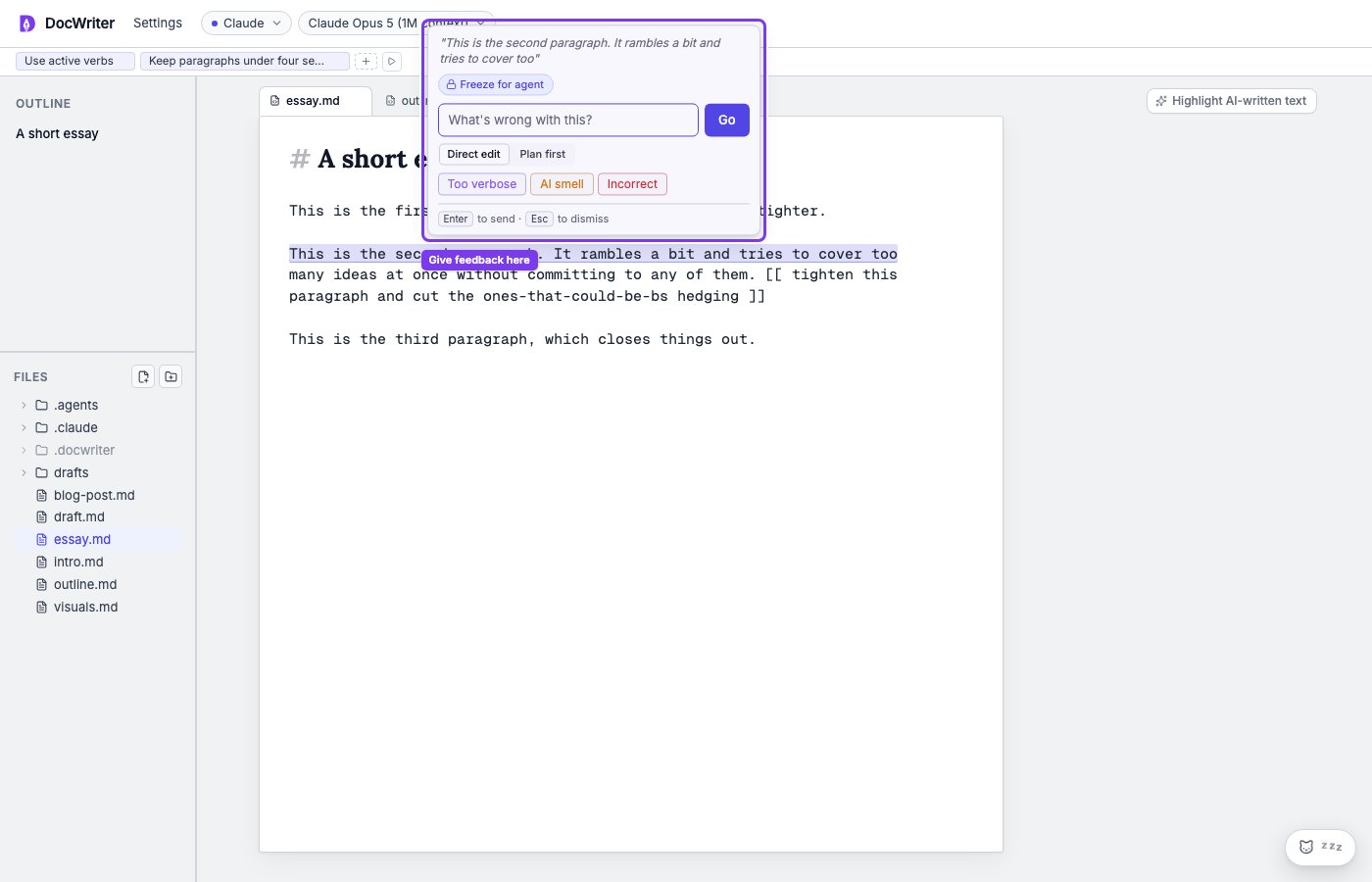
Choose Direct edit when you want proposed wording, or Plan first when you want to review the approach before the agent changes anything. Press Enter or click Go to send. You can continue writing elsewhere while the agent works.
The feedback popup attached to selected text

Select a passage to give the agent feedback beside the text.

Sending feedback opens a comment thread on that passage. The agent replies and proposes edits in that thread, so the discussion stays next to the text it is about.

Review the proposed change

You will see the proposed wording in the editor and a review card in the comment gutter beside it. You can use Accept when the proposal says what you mean. You can use Reject when you want to keep the current text.
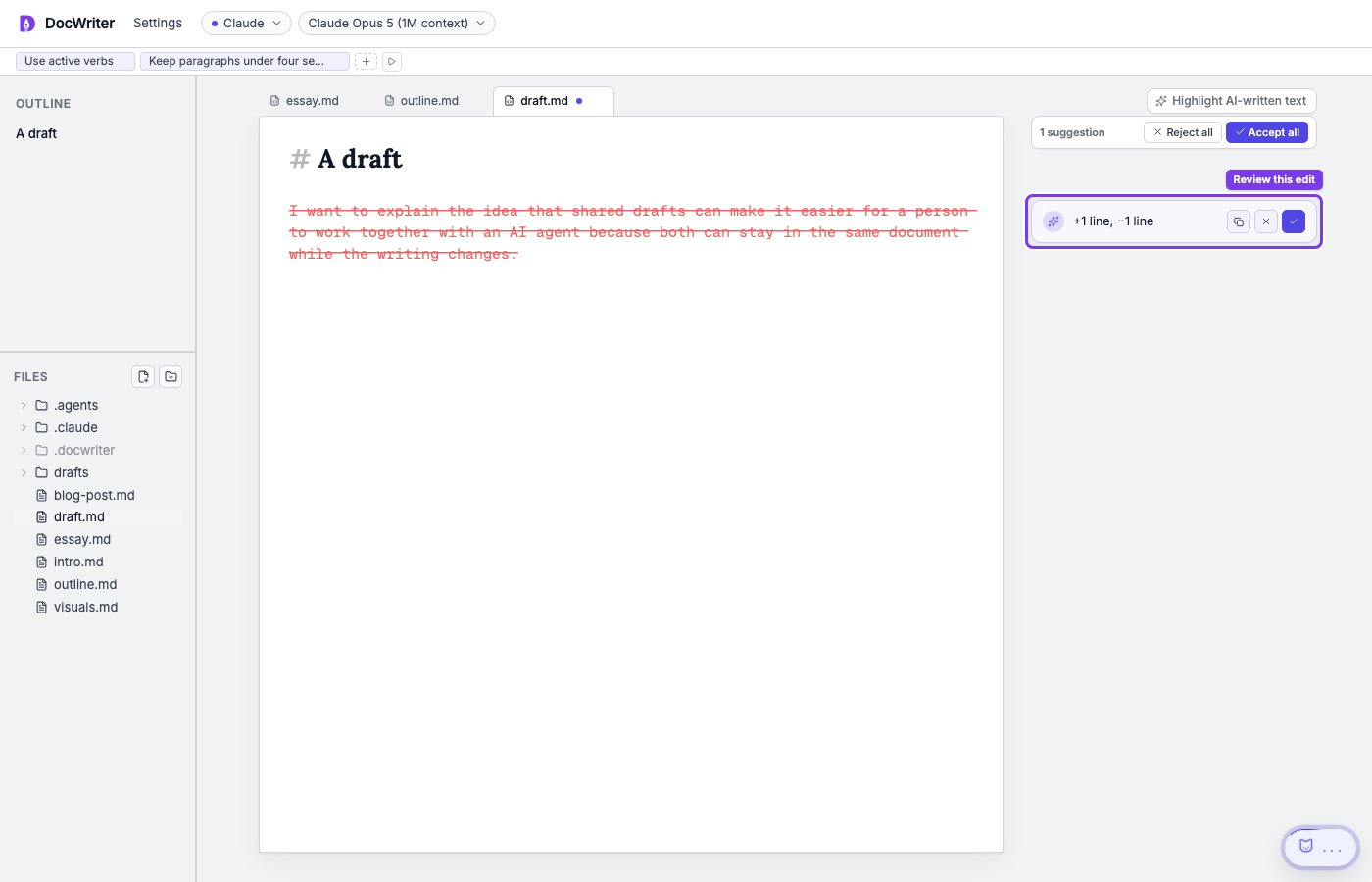
A proposed edit in the comment gutter beside the changed text
If you change the same passage before reviewing a suggestion, the suggestion may become stale. Reject it and ask the agent for a new edit based on the current text.

Open the thread and keep commenting

An unresolved passage shows an underline and a small message count pill in the editor. Click either marker to open the gutter card for that thread. From the open thread you can:
  • Read the agent’s reply and any linked proposed edit
  • Type a reply to continue the discussion on the same passage
  • Accept a linked edit when the wording improves the draft, or reject it when it does not
  • Choose Resolve when the discussion is done
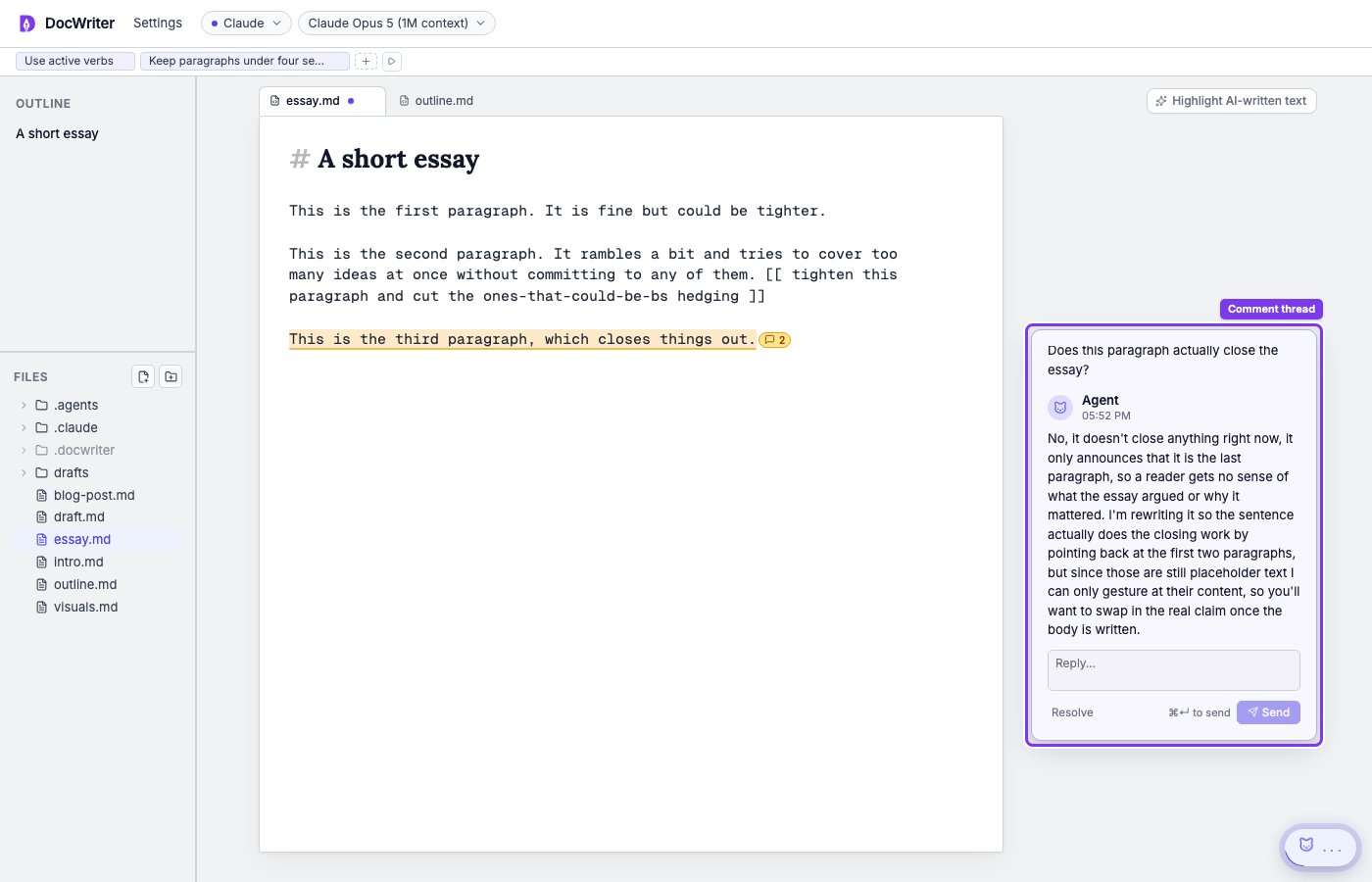
When you reply, the agent wakes with the thread transcript and can answer or revise under the same thread. Use this when one highlight is not enough and you want a short back-and-forth before you accept a change.
A comment thread beside the passage it discusses

Turn feedback into rules

Save a writing rule when the same preference should apply to later requests. For example, if you repeatedly ask the agent to use complete sentences, add that instruction once as a rule. Open the rules toolbar above the editor and choose Add rule. The agent can also suggest a rule after it notices a repeated preference. Accept a proposed rule when you want to keep using it, or dismiss it when the feedback applies only to the current passage.
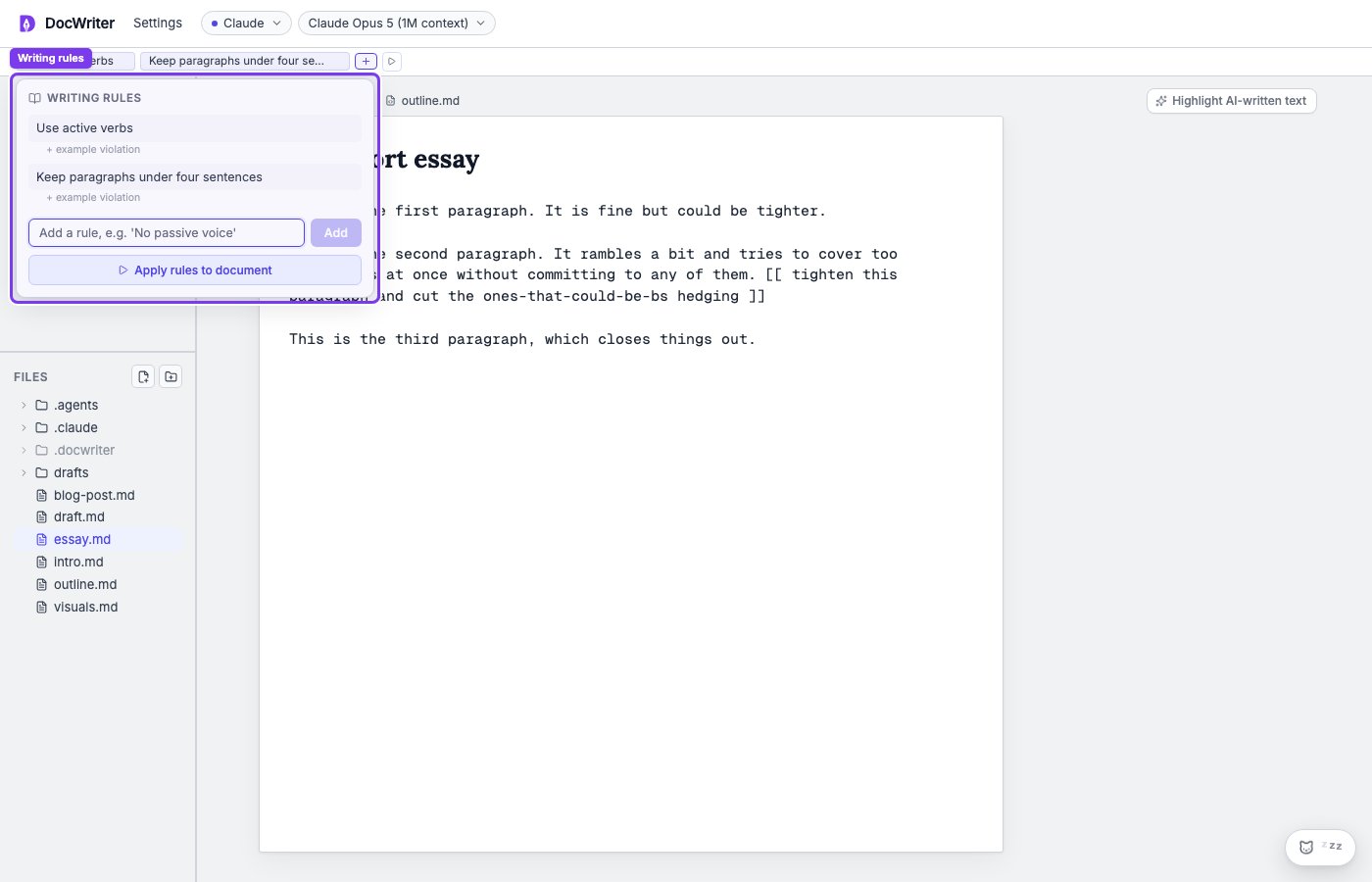
The writing rules panel with saved instructions

Writing rules appear in the toolbar above the editor.

Continue drafting, reviewing suggestions, and adding rules when a preference repeats. The agent can use both the references and enabled rules on later requests.

Run final critique passes

When the draft is complete, open Settings, then Critique pass. Choose a reviewer based on the feedback you need. The Copy Editor checks sentences, the Skeptic checks unsupported claims, the PhD Advisor checks the argument, and Fresh Eyes checks what may confuse a new reader.
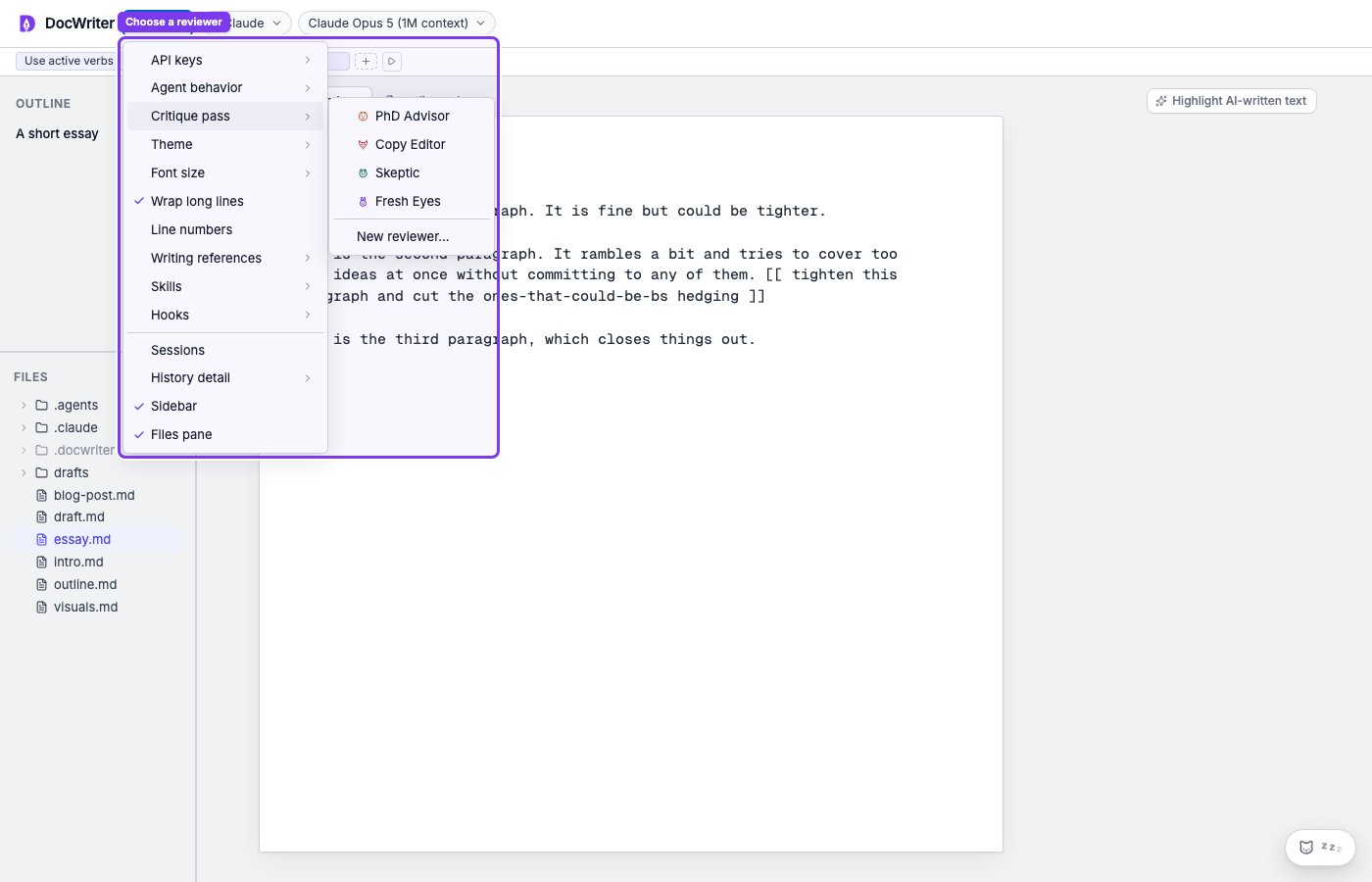
The built in reviewer agents in the Critique pass menu

Choose a reviewer from Settings, then Critique pass.

Each critique pass uses one reviewer at a time. You can run several reviewers in sequence to get feedback from different points of view. When you run a pass, the reviewer reads the active draft. You receive focused findings as comments, with a proposed edit when the reviewer has a concrete fix.
A reviewer comment attached to the passage it discusses
Reply when a finding needs discussion. Accept a linked edit when the wording improves the draft, or resolve the thread when no change is needed.

Finish the project

Open the project file in another editor to confirm that the accepted text is plain Markdown. Your comments and pending suggestions stay in DocWriter until you resolve the comments and accept or reject the suggestions. Read Style guidance, Selected text and directives, Intended audience, Writing rules, and Comments and critique for the full controls. Read Recovery if the editor, provider, or proposal does not behave as described.